
My Point of view
Human Cost of Rapid Scaling
Background
Hypergrowth is a state of rapid expansion where revenue and market share scale at an exponential rate. From the outside, this trajectory is the ultimate hallmark of success. Investors celebrate the increasing valuation, founders relish the market dominance, and the media creates a mythos around the rocket ship startup. However, this growth is a double-edged sword. While it provides the resources and competitive advantage necessary for survival, it simultaneously imposes a profound human debt that can break the very teams responsible for the success.
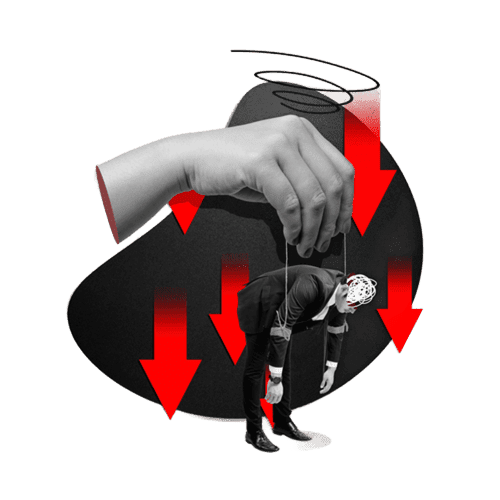
Chapter 2: The Identity Crisis, From Family to Organization
In the lifecycle of a burgeoning business, there is a legendary golden era often characterized by late nights, shared pizzas, and a profound sense of communal mission. Founders and early employees frequently describe this stage using the family metaphor. However, as the business scales, this metaphor often becomes a liability, leading to a profound organizational identity crisis.
The transition from an informal family to a structured organization is not merely a change in headcount; it is a fundamental shift in the social and psychological fabric of the company. Scientific research across anthropology, sociology, and organizational psychology suggests that this transition, if unmanaged, can lead to cultural erosion, employee burnout, and a loss of the very innovative spirit that fueled the company’s initial success.
The Biological Ceiling: Dunbar’s Number and the End of Tribal Knowledge
The first challenge in scaling is biological. Anthropologist Robin Dunbar famously proposed that there is a cognitive limit to the number of stable social relationships a human can maintain, a figure commonly cited as approximately 150.
The Cognitive Threshold
In the family stage (typically under 50 people), communication is organic. Employees possess tribal knowledge. They know who to talk to, how decisions are made, and what the founder is thinking without needing a formal manual. However, as the organization crosses the 150-person threshold, the social brain can no longer keep track of every individual’s role, expertise, and relationship to others.
Dunbar’s Number
Dunbar’s number is a suggested cognitive limit to the number of people with whom one can maintain stable social relationships.
The Duality of "Familiness"
In the field of family business research, the concept of familiness refers to the unique bundle of resources created by the interaction of the family and the business systems. While familiness provides resilience and a long-term orientation, it becomes a double-edged sword during rapid scaling.
Recent organizational studies have begun to critique the we are a family branding. While intended to foster loyalty, the metaphor can lead to significant psychosocial risks:
- Blurred Boundaries: In a family, work-life boundaries are non-existent. When applied to a scaling business, this justifies an always-on culture that leads to chronic stress and burnout.
- Conflict Avoidance: Families often avoid uncomfortable conversations to maintain harmony. In a business, this translates to a lack of accountability and the rationalization of underperformance.
The Social Identity Model of Organizational Change (SIMOC)
As a company formalizes, employees undergo an identity transition. According to the Social Identity Model of Organizational Change (SIMOC), an individual’s sense of self is deeply tied to their membership in the organization.
When a startup becomes a corporate entity, early employees often feel a sense of Social Identity Loss. The startup person identity, characterized by autonomy, speed, and generalist skills, is threatened by the introduction of specialists, middle managers, and red tape.
- The Maintenance Pathway: If employees can see how the new organization still honors its original values, they adjust better.
- The Crisis of the Generalist: Early hires who were jacks-of-all-trades may feel demoted when a specialist is hired to manage the function they built. This leads to a decline in job satisfaction and an increase in imposter syndrome as the rules of the game change.
The Structural Shift: From "Animator" to "Sustainer"
Edgar Schein, a pioneer in organizational culture, identified distinct stages of cultural evolution.
- Stage 1 (Creation): The culture is an extension of the founder’s personality.
The “Identity Crisis occurs when leaders refuse to move to Stage 3. If a founder continues to manage the 200-person organization like a 10-person family, they become a bottleneck, leading to decision fatigue for the leader and learned helplessness for the staff.
The Path Forward: Scaling with "Professional Warmth"
To successfully navigate the transition from family to organization, businesses must adopt what many researchers call Professional Warmth. This involves maintaining the human-centric values of a family while implementing the structural clarity of a high-performing organization.
Key Strategies for Leaders:
-
Define the Culture North Star: Don’t let culture happen by accident. Actively define what parts of the family era are worth keeping (e.g., radical honesty) and what must be left behind (e.g., informal decision-making).
-
Invest in Psychological Safety: As the organization grows, the natural safety of a small group diminishes. Leaders must intentionally build an environment where people feel safe to take risks and admit mistakes (World Economic Forum, 2025).
-
Formalize Professional Development: Replace the family promise of lifetime loyalty with a professional promise of mutual growth. Help early employees find their Version 2.0 roles within the new structure.
Interested? Here you can read more about it.
- Journal of Business Venturing: Growing pains in scale-ups: How scaling affects new venture employee burnout and job satisfaction.
- Harvard Business Review: When Work Feels Like Family, Employees Keep Quiet About Wrongdoing and The Toxic Effects of Branding Your Workplace a ‘Family’.
- Teale.io: Hypergrowth in a Company: What Are the Impacts on Employees’ Mental Health and How Can They Be Reduced?
- National Institutes of Health: Double-Edged Sword Effect of High-Performance Work System on Employee Well-Being.
Next Chapters
Chapter 3: The Cooperation Gap: Why Systems Break Down
-
Communication Overhead: Explain how the complexity of communication increases exponentially (not linearly) with every new hire.
-
The Chaos of Ambiguity: In rapid growth, processes often lag behind hiring. This leads to stepping on toes or critical tasks falling through the cracks.
-
Loss of Trust: Without face-to-face proximity, trust between departments (e.g., Sales vs. Engineering) can erode into Us vs. Them mentalities.
Chapter 4: The Psychological Toll: Mental Health on the Front Lines
-
The Always-On Culture: The pressure to maintain momentum often leads to 80-hour work weeks and the glorification of burnout.
-
Imposter Syndrome: Rapidly changing expectations can make even veteran employees feel like they are no longer qualified for their evolving jobs.
-
Decision Fatigue: Leaders are forced to make high-stakes decisions faster than ever, leading to chronic stress and emotional exhaustion. *
Chapter 5: Strategic Solutions: How to Scale Sustainably
-
Invest in Middle Management: Don’t just promote your best individual contributors; train them to be the emotional and structural anchors for their teams.
-
Radical Transparency: Over-communicate the Why behind changes to reduce anxiety and rumors.
-
Mandatory Slow-Down Zones: Implementing No-Meeting days or mental health sabbaticals to allow the collective nervous system of the company to reset.
-
The Cultural North Star: Re-defining values so they apply to a team of 500, not just a team of five.